Accessibility is usually taught as a compliance requirement. We had to make it something people would finish.
The stakes
Accessibility education had a reputation problem. The category standard was paywalled slide decks and text-heavy modules built to satisfy a requirement. AudioEye wanted an education program that would establish credibility with practitioners, generate qualified pipeline, and give enterprise partners something to train their own teams on. None of that works if nobody finishes the course.
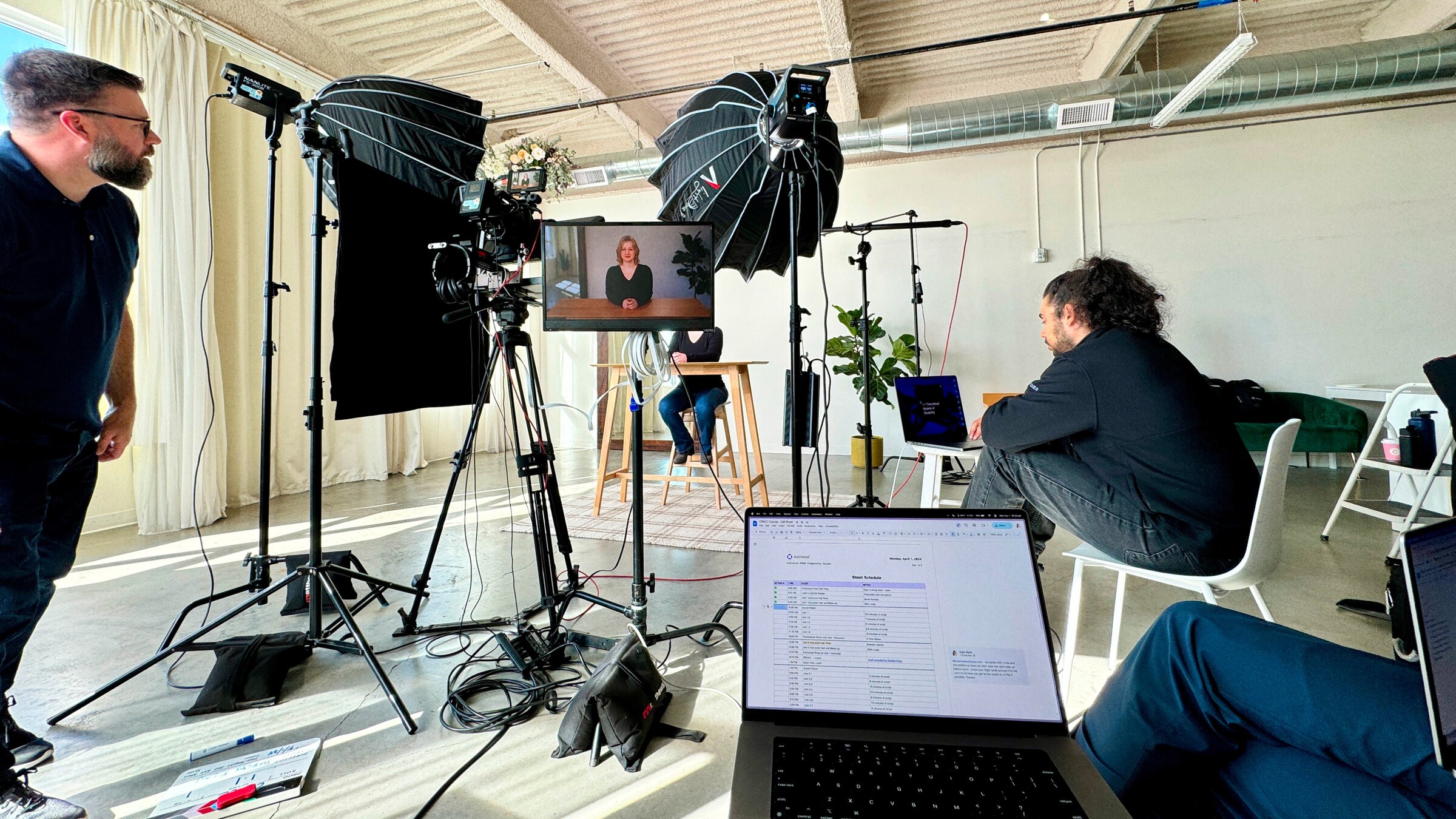
We were building a six-course catalog on a single production budget with one scriptwriter, one accessibility SME, and an outside studio, so there was no room for six bespoke processes.

My role
Across the program I was producer, director, and design lead. I storyboarded and design directed all six courses, managed the external studio through the shoot weeks, and coordinated in-house editing, accessibility deliverables (audio description, captions, transcripts), and platform implementation with the program lead and instructional designer.
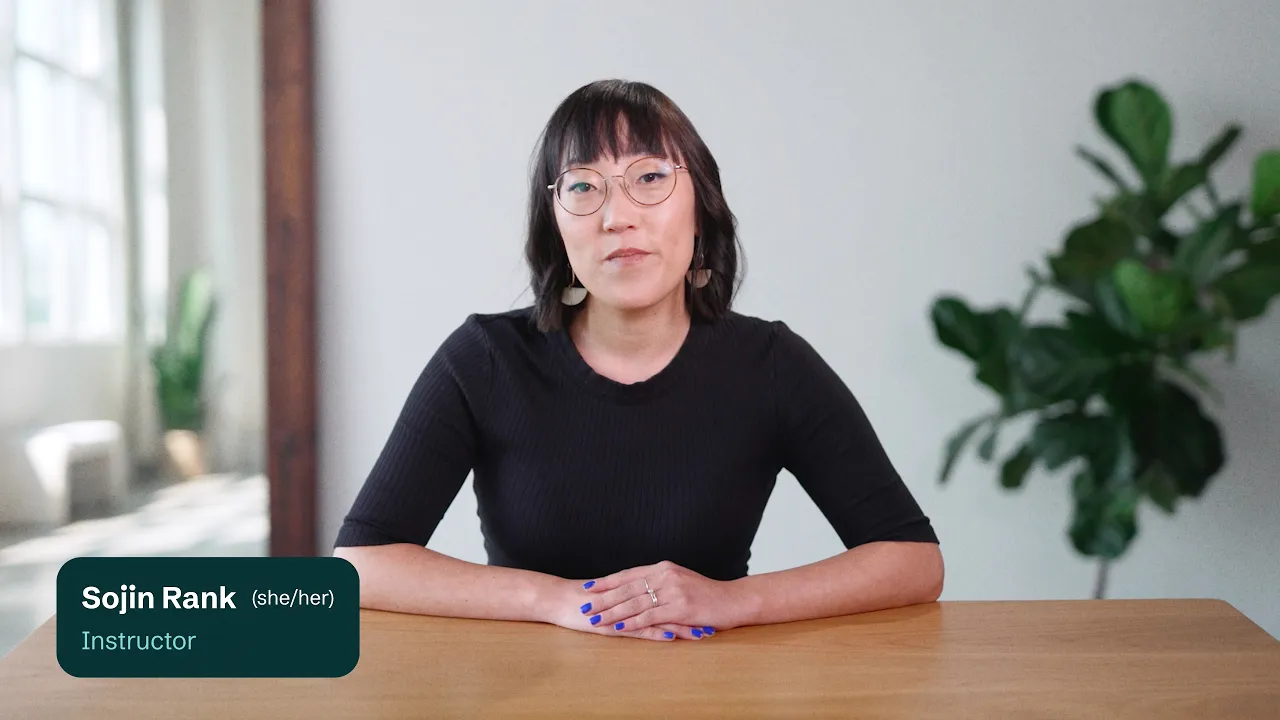
On Accessible Website Design Practices I was also the subject matter expert and the on-camera instructor. Hosting was a resourcing decision as much as a creative one, since casting and directing an outside host for a 2-hour technical course would have consumed budget I wanted in production value. I wrote the content with our curriculum writer, then taught it.
It is the only course in the catalog where the person who designed the production system was also inside it, which meant every pacing problem I later diagnosed was one I had felt from the other side of the camera.
"Sojin is a great host and was able to engage throughout a longer course."
— Learner evaluation, Accessible Website Design Practices
The results
The first course launched July 2024. As of January 2026 the program has grown from 381 to more than 1,000 external learners, with four enterprise partners running branded instances for their own teams.
Program-wide course satisfaction is 92% against a 90% target.
"Great presenters, great job, and as a person with several invisible disabilities, I felt seen."
— Learner evaluation, CPACC Preparation
Accessible Website Design Practices, the course I hosted, has held at or above 90% satisfaction for fourteen straight months and carries the largest evaluation sample of any course in the catalog. Completion climbed from 15% at launch to 24%, a 60% improvement, and it runs six points ahead of the 6-hour certification prep course.
The program also earned AudioEye approval as an IAAP global certification preparation provider in September 2024, which is the credential that makes the catalog defensible to practitioners rather than just to buyers.
What I would change
Completion is the number I did not hit. Learners told me why in the evaluations. They wanted knowledge checks between sections instead of one assessment at the end, and they described the pacing of the long modules as sleepy. One put it plainly, that the videos "needed some more interaction."
I had designed for watchability and treated interaction as a platform feature rather than a creative one. We have since migrated off Absorb onto our own platform and built quizzes throughout each course to check understanding along the way. The next thing to fix is upstream, structuring scripts so every segment ends on a question rather than a fade.
What it changed
The production system built for these courses became the template for how AudioEye produces education content. The program gave four enterprise partners a branded training environment, gave sales a credibility asset in the IAAP approval, and moved the company's education offer from a set of inherited legacy modules to an original catalog.
The original videos did not survive the move to our platform. The system that produced them did.
The team
Producer & Director, Design SME | Sojin Rank |
Program Lead, Accessibility SME | Alisa Smith |
Instructional Designer | Ben Browne |
Content Marketer | Mike Barton |
Video Production |