A company's credibility isn't what it says about itself. It's who agrees to sit down with it.
The stakes
AudioEye needed to be seen as a voice in accessibility, not just a vendor selling into it. HearSay was the answer, a video podcast series built around the people advancing the field, published on YouTube, Apple Podcasts, Spotify, and our own site.
The premise was simple. Ask the most senior people in accessibility to give us an hour, with nothing to offer but the platform and the questions.

The exception
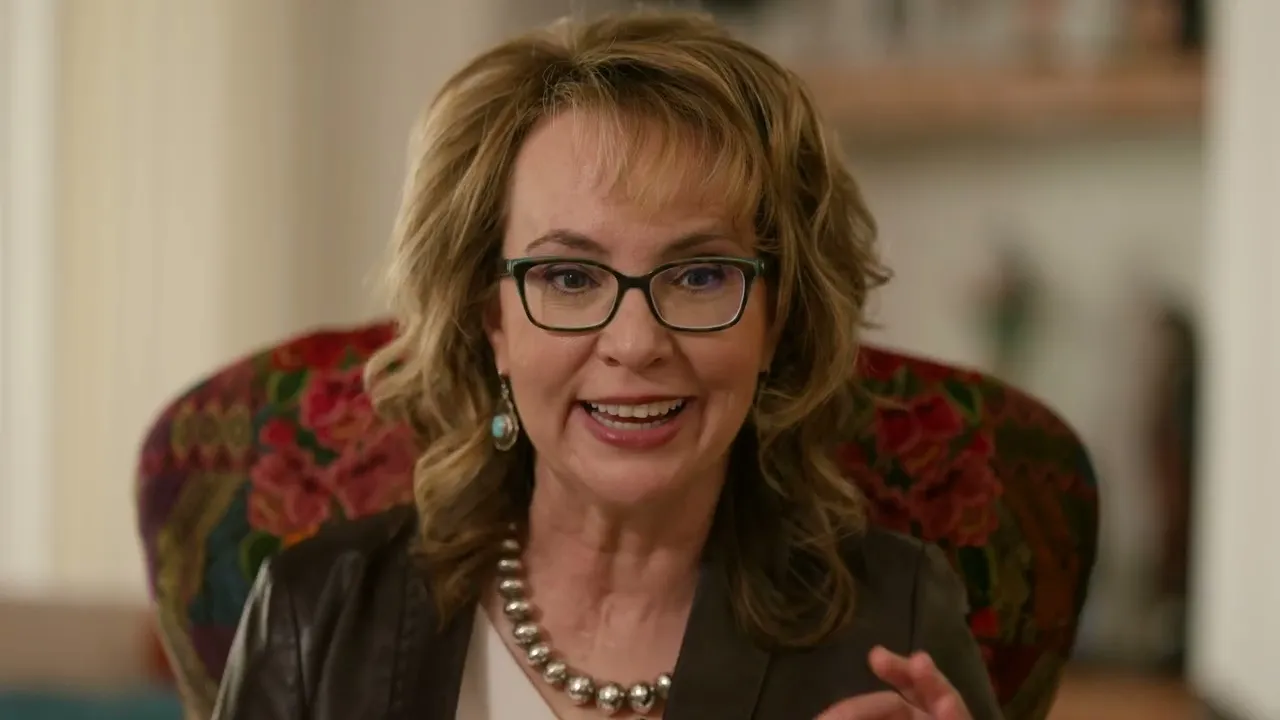
We ran 17 episodes on Riverside, recorded remotely. Gabby's was the one we produced properly. We filmed in her home rather than a studio.
Working with her team, we built the interview around material she had practiced rather than spontaneous conversation, and they reviewed and approved the script before we recorded. I made that call because the alternative was a format that served the show instead of the guest. An episode about aphasia, produced in a way that made aphasia an obstacle, would have failed on its own terms.
My role
Across the series I was producer and creative director for 18 full episodes and 11 HearSay Shorts, where I also hosted an episode.
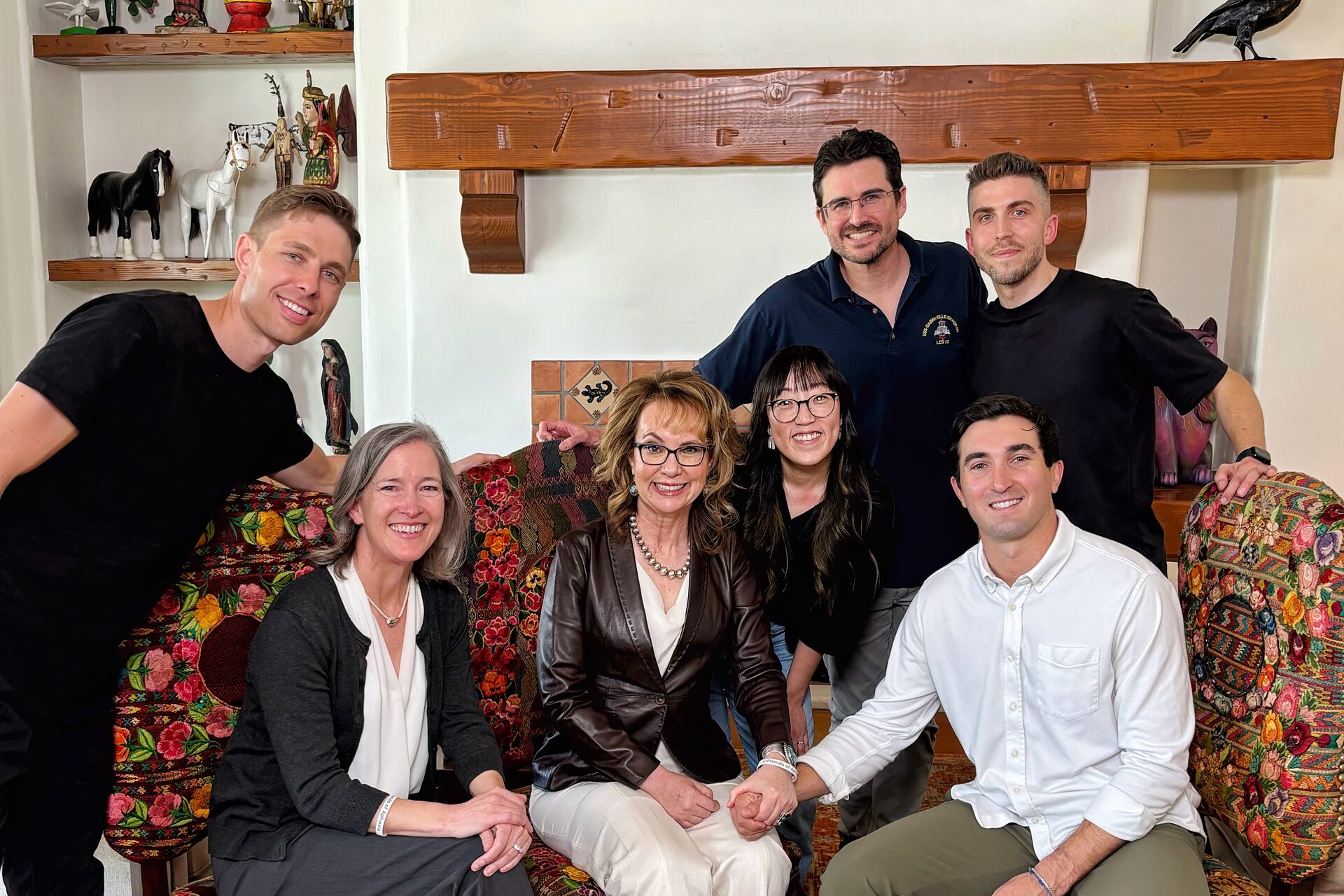
I produced Gabby's episode end to end. Concept and budget, the location plan, crew and gear across two cities, the shoot schedule, and primary contact with her team. Four cameras, five microphones across booms and lavs, rentals sourced in Arizona and Portland, a crew of five on site, and coordination with her staff including people attending remotely.
One day, with a 90-minute window for the interview. Everything upstream of that window existed to protect it. Ty D'Amore hosted the conversation. My job was to build the room he could have it in.
The results
Gabby's episode became the best-performing thing HearSay made. About 2,100 views against a channel typical of roughly 500, and 163 hours of watch time against a typical 30. Average view duration was 4:41, nearly two minutes longer than the channel average. It finished roughly 70% ahead of the next-best episode and 13x the series median.
Across the run we shipped more than we set out to. The plan called for two social cuts per episode and we delivered 10 to 15. The plan called for YouTube and we launched on Apple Podcasts and Spotify as well.
What I would change
We proved we could get the room. We never proved the room was where our audience wanted to meet us.
Long-form interviews were the premise, and completion told us the premise was wrong. Even Gabby's episode, our strongest guest and our only real production, held viewers for 4:41 of 32 minutes. I ran the season one post-mortem in February 2024, and by that July I had approved a video strategy that moved the team's resources into short, high-intent demand content, with the podcast named in writing as the tradeoff.
What I would change is that I slowed it instead of ending it. The series kept publishing at reduced cadence for another year, was rebuilt around shorter episodes, and was eventually deprioritized. Once we had decided where the attention should go, keeping the old format alive cost us twice.
Key takeaway
A great guest gets people to click. It doesn't get them to stay. No amount of production value fixes that.
The team
Producer & Creative Direction | Sojin Rank |
Host | Ty D'Amore |
Producer | Sean Bradley |
Director of Photography | |
Camera Operator | Tyler Hansen, Filmfort |
Set Support & Logistics | Kelsey Rivera, Giffords |
Guest | |
Speech-Language Pathologist |